
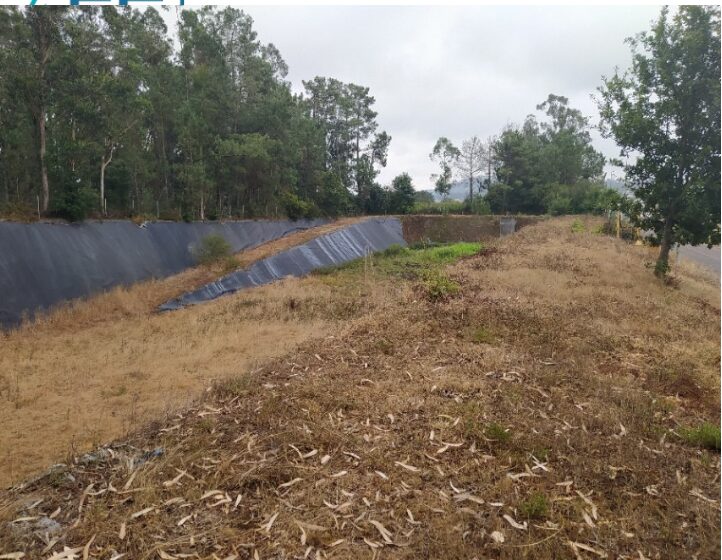
Águas do Norte will begin the design-construction contract for an infrastructure included in the Life Natural Adapt 4 Rural Areas Project (LIFE19-CCA_PT_001283), to be carried out at the Waste Water Treatment Station (WWTP) of Agra, in the municipality of Vila Nova de Famalicão, with an investment worth around 550 thousand EUR. The respective contract was awarded to the company AMBIÁGUA – Gestão de Equipamentos de Água, S.A., and has an execution period of 424 days.
The undertaking is the result of an application made to the European Union’s LIFE Programme, in partnership with the Vila Nova de Famalicão City Council. The general objective of the LIFE Natural Adapt 4 Rural Areas Project is to implement innovative measures to adapt to climate change, which contribute to sustainable water management in the basin associated with Ribeira de Fradelos, a tributary of the Ave river that crosses that Municipality.
The execution of the project aims to study the capacity that a Phyto-WWTP has in removing contaminants from an effluent of a predominantly industrial nature, which will be carried out after the respective treatment, serving as a pilot study for other cases, with the objective of the water being used for irrigation, the restoration of ecosystems and biodiversity support.
The design of the project involves interventions in the filtration building of the Agra I WWTP, to collect filtered water, raise the water to the complementary treatment stage, and gravitational routing of the treated water to the final interceptor, also ensuring discharge into the existing water line. The treatment to be implemented in the lagoon will consist of structures that consist of the installation of islands made of specific floating material to support aquatic plants. It also includes civil works, electrical installations, automation, flow measurement and communications.
Águas do Norte began its activity on June 30, 2015 and, as the concessionary entity of the multi-municipal water supply and sanitation system in the North of Portugal, is on the rise, and is responsible for the capture, treatment and supply of water for public consumption and for the collection, treatment and rejection of domestic, urban and industrial effluents and effluents from septic tanks.
It also assumes the operation and management of the water system in the Northwest region, bringing together in a single management entity, the water supply and sewage services in “high” (provided to Municipalities) and “low” (provided to end users, the citizens), in a regular, continuous and efficient manner.
